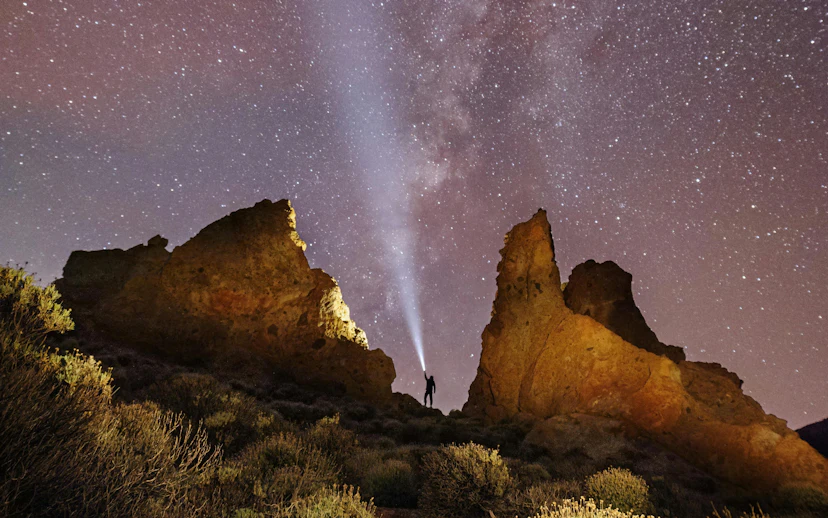
Visit Mount Teide | Your complete visitor guide
Want to visit Mount Teide? Good choice! But this isn't quite a "turn up, take a photo, leave" kind of mountain.
Between a cable car that stops below the actual summit, permit-controlled trails, an Observatory, stargazing experiences and weather that gets the final say, a little planning goes a long way. Visiting Mount Teide is spectacular when you know what you're booking and where you're going. This guide covers the decisions that matter, from the best time to visit Mount Teide to what deserves a spot on your itinerary.
Quick overview: Mount Teide at a glance
If you're deciding how to visit Mount Teide, start here before you lock in a route.
- When to visit: Daily. Early morning is noticeably calmer than late morning and midday, because parking pressure, tour arrivals, and the clearest weather window all converge at once.
- Getting in: From €42 for a standard return cable car ticket. Cable car plus guided Pico Viejo viewpoint access starts from €54.50. Book ahead if you want a specific slot, and book much earlier if your plan depends on summit access.
- How long to allow: 3–5 hours works for most self-drive visits. A summit attempt, a scenic park drive, or a sunset/stargazing format pushes the day much longer.
- What most people miss: La Rambleta is not the summit, and the free-access upper viewpoints often deliver the best part of the visit even without a crater permit.
- Is a guide worth it? Yes for summit plans or if you want transport handled for you; for a simple cable car visit, the Audioguide usually adds enough context for less.
🎟️ Cable car slots for Mount Teide are worth booking in advance during summer and holiday periods. Lock in your visit before the time you want is gone. See ticket options ➜
Jump to what you need
🕒 Where and when to go
🗓️ How much time do you need?
🎟️ Which ticket is right for you?
🗺️ Getting around
🏔️ What to see
♿ Facilities and accessibility
Where and when to go
How do you get to Mount Teide?
Mount Teide is a mountain destination inside Teide National Park, reached by a long road approach rather than a quick city stop, and most visitors arrive by private vehicle.
Mount Teide Cable Car base station, Teide National Park, Tenerife, Spain
- Car: Nearly 80% of park visitors arrive by private vehicle, and the small parking areas near the base station fill fastest once late-morning traffic builds.
- Organized transfer: North and south Tenerife pickup zones remove the biggest friction point, which is matching mountain-road arrival with your cable car slot.
- Public bus: Service is possible, but it is the least flexible option if you are trying to line up a fixed reservation with mountain weather.
Which entrance should you use?
There is one practical access point for the cable car, but the real mistake is not the doorway. It is arriving without understanding whether you only have a cable car ticket or a summit-compatible plan.
- Base station entrance: Located at the Mount Teide Cable Car base station. Expect the longest waits in late morning and on wind-affected days, when operations can bunch up even with timed tickets.
When is Mount Teide open?
- Teide National Park: Open year-round as a protected landscape and road-access destination.
- Mount Teide Cable Car: Operates on a daytime schedule that varies by season and weather.
- Weather exceptions: Strong wind, snow, ice, or falling-rock risk can suspend the cable car or change access conditions.
- Last ascent/return: Check the operating board on the day, because weather-related pauses can shift the practical schedule.
When is it busiest? Late morning through midday in summer and holiday periods are the most pressured, because private cars, tour buses, and clear-weather visitors arrive in the same window.
When should you actually go? A clear weekday morning gives you easier parking, quieter upper-station trails, and more recovery room if wind briefly disrupts operations.
How much time do you need?
| Visit type | Route | Duration | Walking distance | What you get |
|---|---|---|---|---|
Highlights only | Base station → cable car → La Rambleta viewpoints → return | 3–4 hrs | 1–2 kms | You get the core altitude payoff and volcanic views, but you skip most roadside stops and any summit ambition |
Balanced visit | Scenic drive through Teide National Park → cable car → La Rambleta → Pico Viejo viewpoint route → return | 4–6 hrs | 3–5 kms | This adds the best upper-station walk and makes the short ride feel more worthwhile, without the permit pressure of the summit trail |
Full exploration | Scenic park route → cable car → La Rambleta → summit-authorized trail or sunset/stargazing format → return | 7+ hrs | 5–8 kms | This is the most complete Teide day, but it depends on weather, stronger pacing at altitude, and the right permit or guided format |
Which Mount Teide ticket is best for you
| Ticket type | What's included | Best for | Price range |
|---|---|---|---|
Return cable car ticket | Return cable car + Science and Legend exhibition | A self-drive visit where you mainly want the altitude and views without paying for transport or guiding. | From €42 |
Cable car + Audioguide | Return cable car + Teide Legend Audioguide in 8 languages + exhibition | A self-guided visit where you want context at the top without committing to a group schedule. | From €45.50 |
Cable car + guided Pico Viejo viewpoint walk | Return cable car + guided upper-station walk to the Pico Viejo viewpoint | A top-station visit where you want a more purposeful route but do not need the summit permit complexity. | From €54.50 |
Sunset and stargazing experience | Transfer + sunset cable car + guide + picnic dinner + telescope stargazing | An evening-led Teide experience where atmosphere and dark skies matter more than reaching the summit. | From €182 |
How do you get around Mount Teide?
Getting around
Think of Teide as a giant volcanic landscape rather than one attraction with an entrance and exit.
- Roadside viewpoints: Driving through the park takes you past plenty of pull-offs and viewpoints. Save a few for your journey down; you'll enjoy them more when you're no longer checking the clock for your cable car slot.
- Cable car base station: This is your main jumping-off point for the cable car. You'll find parking, visitor facilities and the Mount Teide visitor centre experience around the lower-station area.
- La Rambleta: The cable car whisks you to roughly 3,555m, but here's the important bit: this isn't Mount Teide's summit. La Rambleta is your starting point for upper walking routes and viewpoints.
Suggested route: If you don't have summit access, forget the FOMO. Explore the upper viewpoints from La Rambleta and make the scenic road stops on your way back down.
Maps and navigation tools
- Map: Download a Teide National Park map before leaving your hotel. Knowing where the cable car, Observatory and roadside stops are makes visiting Mount Teide considerably easier.
- Signage: Navigation around the lower station is straightforward, but understand the difference between La Rambleta, the viewpoints and the summit trail before heading up.
- Guided experiences: Worth considering if you don't want to coordinate transport, tickets and mountain timings yourself.
- 💡 Pro tip: Download maps and guides before leaving the coast. Mobile signal is not something you want your entire volcano itinerary depending on.
What is Mount Teide worth visiting for?

Mount Teide Cable Car ascent
Experience type: High-altitude cable car
The ride is short; the altitude change isn't. In minutes, you're transported from the volcanic slopes to La Rambleta at roughly 3,555m. The trick is not treating the cable car itself as the main event. Step out, explore the permitted upper routes and give yourself time to actually absorb the landscape before heading straight back down.
Where to find it: Mount Teide Cable Car base station to La Rambleta.
La Rambleta
Area type: Upper station and viewpoint zone
This is where Teide goes from "very large volcano" to "okay, we're really high." Many first-time visitors assume La Rambleta is the summit. It isn't. Instead, think of it as the gateway to Teide's upper viewpoints and walking routes. Get oriented before choosing where to head next.
Where to find it: At the upper cable car station, around 3,555m above sea level.
Pico Viejo viewpoint route
Experience type: Scenic upper-station walk
No Mount Teide summit permit? You still have plenty to see. The Pico Viejo direction delivers huge caldera views and a closer look at Teide's darker volcanic terrain. It's a strong option if you want your cable car trip to include more than a quick photo at the upper station.
Where to find it: From La Rambleta along the designated upper-station routes towards Pico Viejo.
Roques de García
Experience type: Volcanic rock formations
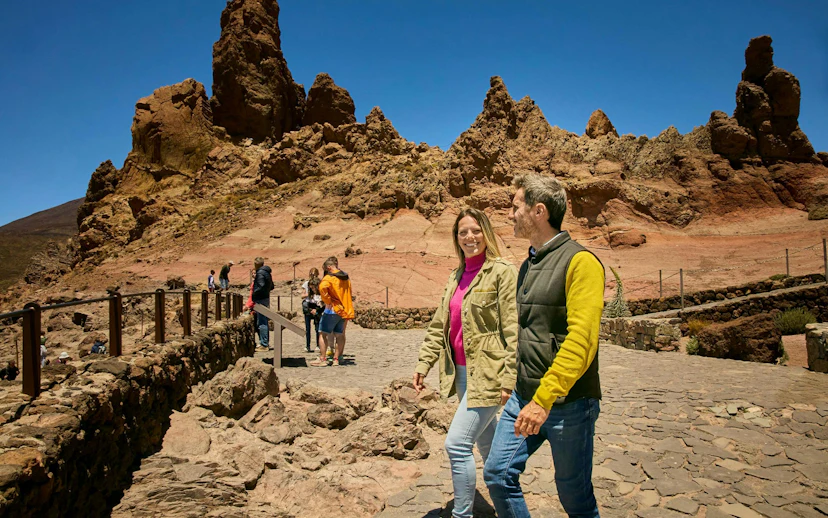
If Teide had a greatest-hits photo album, Roques de García would be on the cover. These dramatic formations give you something the upper station doesn't: Teide rising behind an unmistakably volcanic foreground. They're also relatively easy to add to a road trip through the park.
Where to find it: Along the national park road below the cable car area.
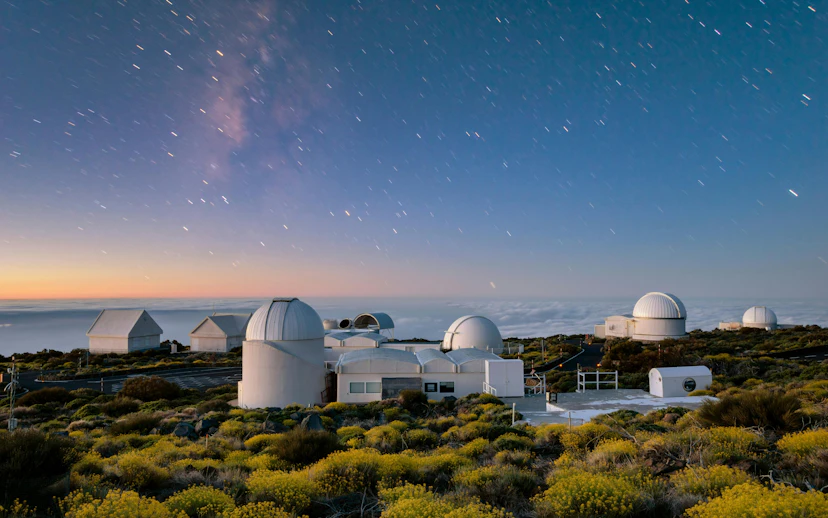
Teide Observatory
Experience type: Astronomy and science
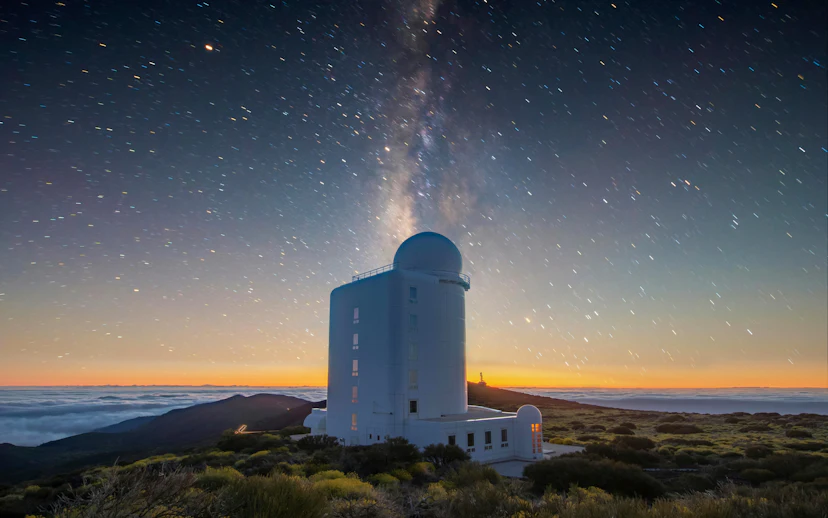
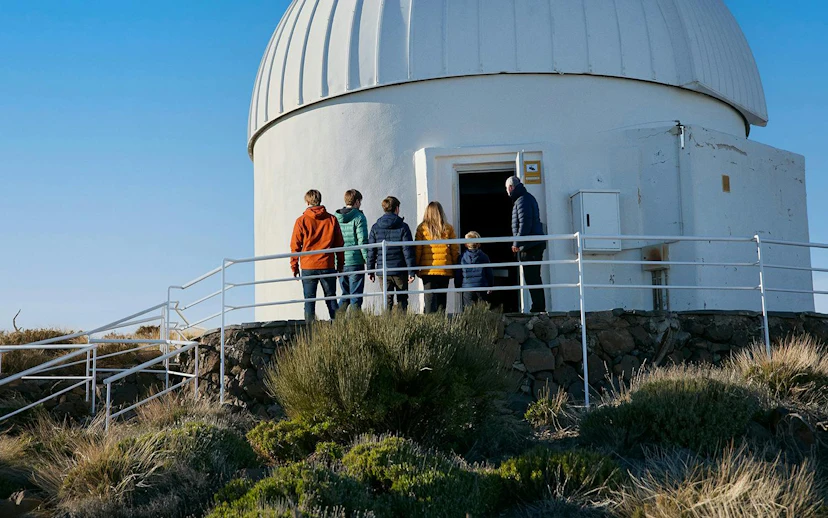
A Teide Observatory visit shows you another side of the mountain, one where the stars matter as much as the volcano. Sitting high above much of Tenerife's cloud cover and light pollution, the Observatory is used for astronomical research. A guided Teide Observatory visit is ideal if you'd rather understand what's happening above your head than simply take another landscape photo.
Where to find it: Izaña, accessed from TF-24.
Sunset and stargazing skies
Experience type: Evening mountain experience
Daytime Teide is volcanic. Night-time Teide belongs to the sky. Sunset and stargazing experiences turn visiting Mount Teide into something completely different, swapping daytime crowds and lava landscapes for changing light, darkness and astronomy.
If you're considering a Teide Observatory visit too, astronomy-focused experiences can turn the mountain into a much fuller day rather than a simple cable car excursion.
Facilities and accessibility
- 🍽️ Café: A café is available at the base station, so it works best as a pre-ride or post-ride stop rather than a scenic meal plan.
- 🅿️ Parking: Parking is near the base station, but the lots are small and the hardest part of a self-drive visit is often getting a space at the time you want.
- 🧭 Visitor information: Day-of-operation updates are handled at the base station, which matters when wind changes departures or delays boarding.
- 🏛️ Exhibition: The Science and Legend exhibition is included with cable car tickets and is the most useful thing to do if your slot is delayed.
- 🪑 Seating/rest areas: The base area is the practical place to sit and reset, because upper-station time is better spent walking than lingering.
- 🚍 Tour logistics: Transfer-included formats pick up from north and south Tenerife zones, which effectively replace the need to manage base-station parking yourself.
- ♿ Mobility: The cable car removes much of the climb, but this is still a mountain environment and La Rambleta is not a fully step-free summit experience.
- ♿ Health restrictions: Pregnant visitors and people with cardiovascular conditions are not allowed on the cable car, and respiratory issues can also make the altitude more demanding.
- 👁️ Visual impairments: The main published self-guided support is the Teide Legend Audioguide, so the experience is easier with a companion than as a fully independent tactile route.
- 🧠 Cognitive and sensory needs: Clear weekday mornings are usually the easiest visit window because queues are shorter, weather decisions happen earlier, and the upper station feels less pressured.
- 👨👩👧 Families and strollers: Children under the age of 3 years are not allowed on the cable car, and strollers are impractical on upper mountain paths once you are out of the base area.
Mount Teide works best for school-age children who enjoy landscapes, short walks, and a big change of setting rather than constant attractions.
- 🕐 Time: Around 3–4 hours is realistic for families doing a cable car visit, while summit-led plans are usually too demanding for a casual family day.
- 🏠 Facilities: The base station is the family anchor point because the café, exhibition, and parking are all there before the altitude change.
- 💡 Engagement: Frame it as a volcano day, not a summit mission, because the ride and scenery usually land better with children than a rushed achievement goal.
- 🎒 Logistics: Bring layers, water, snacks, and sun protection from the coast, because the temperature shift at altitude catches beach-day packing off guard.
- 📍 After your visit: Pair the mountain with an easy roadside viewpoint or a village meal on the drive down instead of adding another hard activity.
Rules and restrictions
What you need to know before you go
- Entry requirement: Teide National Park is free to enter, but the cable car, summit plans, and sunset products need advance booking, and the final PNT 10 summit trail needs separate authorization.
- Bag policy: Bring only what you can comfortably carry, because no clearly published baggage-storage system should be assumed for a mountain day.
- Re-entry policy: Park access is flexible, but cable car reservations are time-sensitive, so leaving the base area can mean missing the slot you booked.
Not allowed
- 🚫 Summit access without authorization: A cable car ticket does not let you continue onto the final crater trail without the matching permit or guided access.
- 🚬 Ignoring weather closures: Do not treat a confirmed booking as a guarantee of departure, because wind and winter conditions can still suspend operations.
- 🐾 Unsuitable participants on the cable car: Children under the age of 3 years, pregnant visitors, and people with cardiovascular conditions are not allowed on the cable car.
- 🖐️ Inappropriate footwear: Open shoes, beach shoes, and low-grip fashion footwear can rule you out on cable car and upper-route products.
Photography
- Personal photography is one of the main reasons people come to Mount Teide, especially on the road viewpoints and at La Rambleta.
- The practical limit is not the scenery but the mountain setting: wind, thin air, and narrow walking areas make slow setup and bulky gear less comfortable than many visitors expect, and any specialist equipment should fit around active visitor flow.
Good to know
- Biggest misconception: The cable car ends at La Rambleta, not the summit, so the final crater section is still a separate decision.
- Hardest planning step: Matching a summit permit with a workable cable car or guided time slot is often harder than getting into the park itself.
Heading to the summit? Sort your permit first!
Your Mount Teide cable car ride does not require a summit permit, as your ticket takes you up to La Rambleta at 3,555m. A permit for Mount Teide is only required if you plan to hike the final PNT 10 trail from La Rambleta to Teide’s summit at 3,718m. If the summit is on your bucket list, arrange the required permit separately on-site.
Practical tips
- Booking: If you want a particular cable car slot, book ahead. If reaching the summit is your priority, plan even earlier because your cable car timing and summit authorization need to work together.
- Timing: The best time to visit Mount Teide depends on what you want from the mountain. Earlier visits can make planning easier, while sunset and stargazing deserve dedicated evening experiences rather than being squeezed onto the end of a daytime itinerary.
- Pacing: No summit permit? Don't treat your trip as second best. La Rambleta and the upper viewpoints are impressive destinations in their own right.
- Weather: Teide makes its own rules. Wind, snow or other mountain conditions can affect cable car operations, so keep some flexibility in your Tenerife itinerary.
- What to wear: Pack for two climates. Beach weather at your hotel doesn't mean T-shirt weather at 3,555m. Bring layers and wear proper shoes with grip.
- Food: Eat before heading up or after coming down. Your precious upper-station time is better spent staring across Tenerife than hunting for lunch.
- Visitor facilities: The Mount Teide visitor centre and visitor facilities are useful additions to a wider park day, particularly if you want more context on Teide's geology and volcanic landscape.
What else is worth visiting nearby?
La Orotava
Distance: Roughly 30–35km from the cable car area
Why people combine them: Its historic centre, traditional Canarian architecture and gardens give you a completely different Tenerife after hours of lava and volcanic terrain.
Puerto de la Cruz
Distance: Roughly 40–45km away
Why people combine them: Pair the mountain with Tenerife's northern coast, giving you restaurants, promenades and ocean views after your high-altitude visit.
Vilaflor
Distance: Roughly 25km away
Why people combine them: This small mountain village sits naturally on the southern approach to Teide, making it an easy coffee, meal or short wander stop before or after the national park.
Eat, shop and stay near Mount Teide
- Teleférico del Teide café: The convenient choice around the cable car base for coffee and a quick bite. Come for practicality rather than a leisurely destination meal.
- Parador de Las Cañadas del Teide: One of the most atmospheric places to eat inside the park, with Canarian dishes and volcanic scenery right outside.
- Restaurante Papillon: A handy stop along the Teide route for hearty Canarian food. Think grilled meats and familiar local flavours after a morning on the mountain.
- Restaurante El Portillo: Convenient for visitors approaching from northern Tenerife, with a relaxed mountain-road feel and traditional dishes.
- 💡 Pro tip: Eat either before boarding or after you descend. Mount Teide is one of those places where scenic time is better spent moving than trying to anchor the day around lunch.
Don't come expecting a volcanic Oxford Street. Shopping around Mount Teide is mostly about souvenirs and visitor-centre purchases.
- Cable car facilities: Pick up Teide-themed souvenirs and small keepsakes around the lower-station visitor facilities.
- Mount Teide visitor centre: Depending on the visitor facility you enter, look for educational material and products connected to Teide's geology and natural heritage.
- La Orotava: Better for proper souvenir shopping, local crafts and Canarian products if you're heading towards northern Tenerife.
- Vilaflor: A convenient southern stop for small local products and souvenirs on the drive to or from Teide.
Yes, but only if the mountain is the point of the trip. Staying nearby makes sense for stargazing, sunrise photography, or an early mountain start. It makes much less sense if you want restaurants, nightlife and spontaneous evening plans.
- Price point: Mountain accommodation is limited, so you're paying partly for location and convenience.
- Best for: Drivers, photographers, astronomy lovers and travellers who want to visit Mount Teide without commuting from the coast.
- Consider instead: Stay in South Tenerife for beaches and easier resort facilities, or Puerto de la Cruz/La Orotava for a northern base with convenient access towards Teide.
Frequently asked questions about visiting Mount Teide
Yes, especially if volcanic landscapes, panoramic views or astronomy appeal to you. Visiting Mount Teide can include everything from an easy cable car ascent to upper-station walks, a Teide Observatory visit, roadside viewpoints and stargazing, so you can tailor the day to your interests.
To visit Mount Teide, first decide whether you want the cable car, summit, Observatory, viewpoints, or stargazing experience. Then book any timed experiences in advance and arrange transport. You can self-drive, use limited public transport, or choose a tour with transfers.
Yes, you can drive into Teide National Park and reach areas including the cable car base by road. You cannot drive to Mount Teide's summit. From the cable car base, the cable car takes you to La Rambleta, with controlled walking routes continuing higher.
Allow roughly 3–5 hours for a focused self-drive visit, depending on what you add. Full-day tours and experiences combining transport, viewpoints, or astronomy naturally take longer. Don't judge the duration by the cable car ride alone; getting around the park takes time.
Booking ahead is strongly recommended if your plans involve the cable car, observatory or another timed experience. It becomes even more important if you're coordinating several elements on the same day.
Aim to arrive around 30 minutes before your scheduled cable car time. It gives you breathing room for parking, finding the entrance and completing any checks without beginning your mountain day with an accidental sprint.
The final controlled route to Mount Teide's crater requires separate authorization. A cable car ticket only takes you as far as La Rambleta, so check the current summit requirements separately before planning your visit.
Yes, but keep it small and practical. You're heading into high-altitude terrain, so a light day bag containing water, sun protection and an extra layer is far more useful than carrying half your hotel room uphill.
It can be, but check age and health restrictions for your chosen experience before booking. Very young children cannot use the cable car, while older children may enjoy the cable car, volcanic landscapes and shorter stops more than demanding summit routes.
Accessibility is limited by the mountain environment, altitude and uneven terrain. Individual facilities and experiences have different restrictions, so check accessibility for the exact activity you're considering rather than treating the whole park as one attraction.