One of the most popular departure spots, Puerto Colon is well-connected by taxis and buses from all major southern resorts. Its calm waters make it a favorite for families and first-time whale watchers, and there are plenty of cafés and shops nearby to enjoy before or after your trip.
How Headout makes choosing experiences effortless
We curate the best ways to experience
We research and organise all unique experiences - from tickets to tours to special combos - so you get all the choices without the clutter.
We partner with the best
Every supplier is vetted for quality, reliability, and value so you only get top rated experiences. No surprises, no disappointments.
All the best options, in one place
Each experience is thoughtfully organised to give you maximum availability, great value and an easy way to choose.
Book with complete peace of mind
Free cancellations, Flexible payments, and 24/7 support - thoughtfully designed for flexibility, assurance, and total peace of mind.
Slide 1 of 41/4
Slide 1 of 4



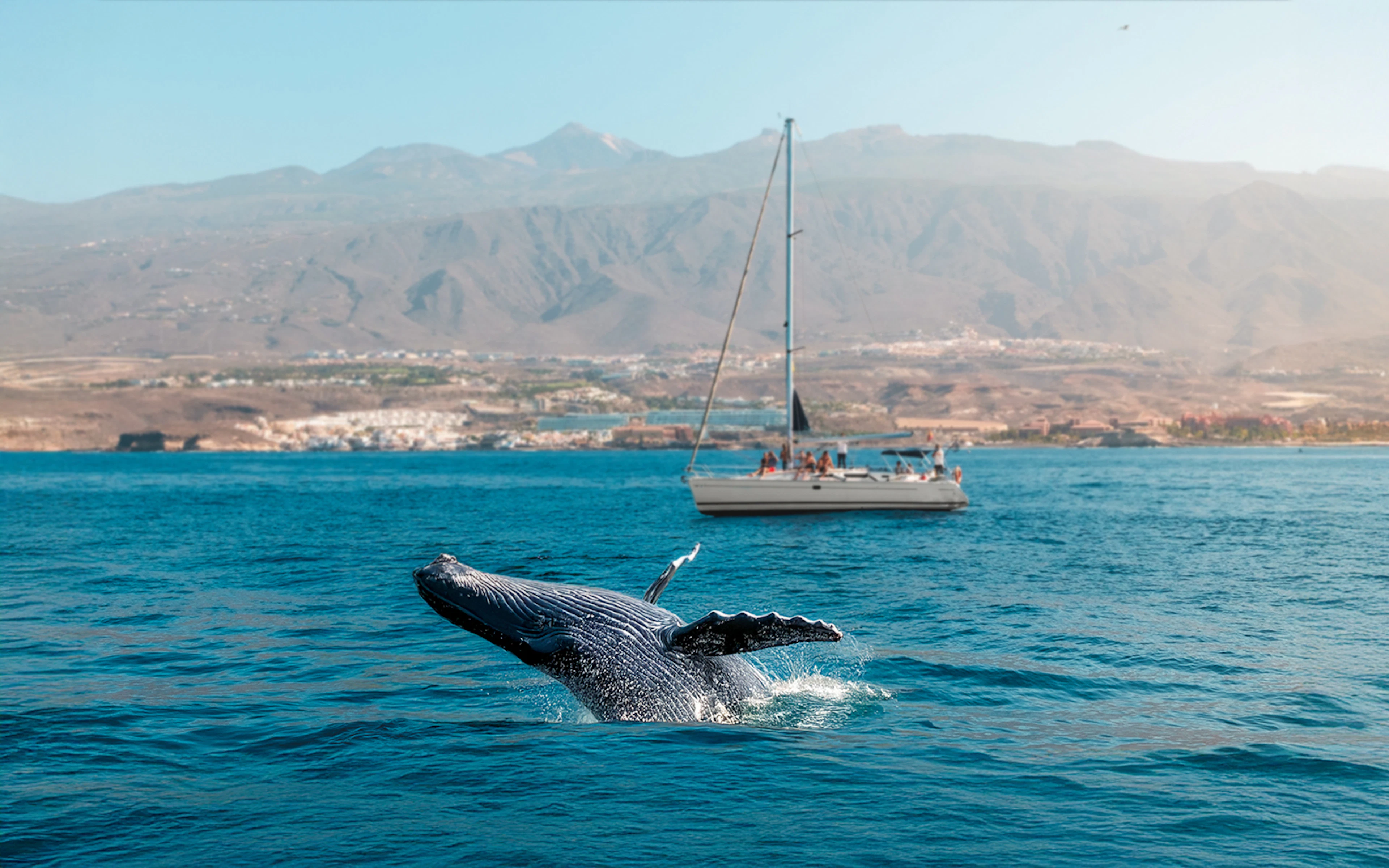
Tenerife, the largest of Spain’s Canary Islands, is a place where volcanic landscapes meet sparkling Atlantic waters. Beyond its golden beaches, lush forests, and lively towns, Tenerife is a true sanctuary for marine life. Its unique position along the migratory routes of whales and dolphins, combined with warm waters and deep ocean trenches just off the coast, makes it one of the best places in the world for year-round whale watching.
Overview:
- Popular boarding points: Puerto Colón (Costa Adeje), Puerto de Los Cristianos, Marina del Sur (Las Galletas), Puerto de Los Gigantes
- Best time to go: Year-round for resident pilot whales and dolphins; more migratory species in late autumn to spring
- Typical tour duration: Shared cruises 2–3 hours; private charters 3–8 hours
- Marine life you might see: Pilot whales, bottlenose dolphins, Atlantic spotted dolphins, turtles and seabirds, with occasional fin, Bryde’s or humpback whale visits
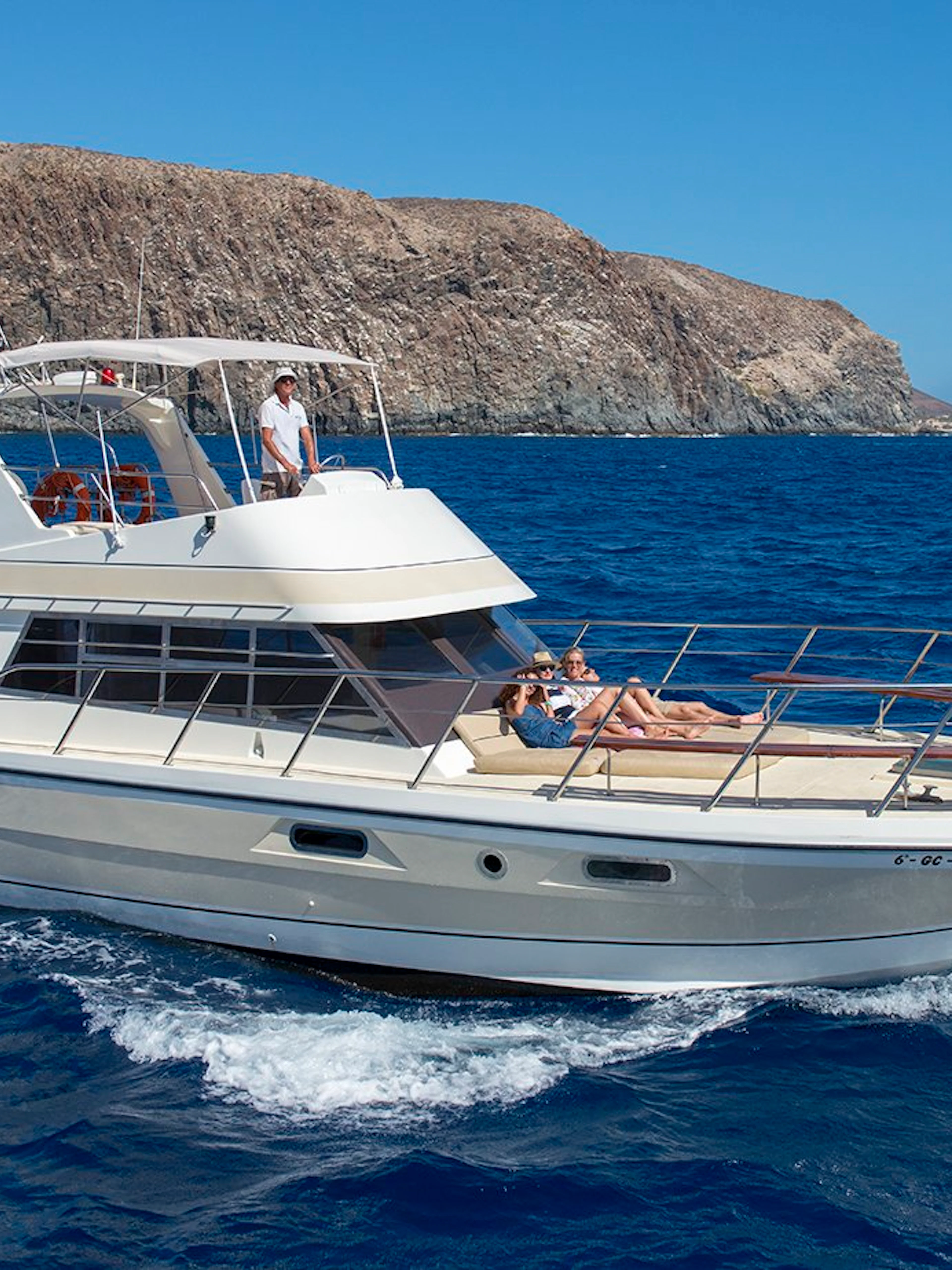
- Boat types: Large catamarans, small-group yachts and sailboats, pirate-style boats, private sailing yachts
- Recommended first-timer tour: A 3-hour catamaran or yacht cruise from Costa Adeje with snacks, drinks and a snorkel stop, so you get whales, views and swim time in one go.
Why go whale watching in Tenerife

1/6
A marine wonder all year round
Tenerife’s waters are a year-round haven for whales and dolphins, thanks to warm Atlantic currents and nutrient-rich deep waters close to shore. Every season offers a different spectacle—from playful dolphins dancing alongside boats to majestic pilot whales gliding gracefully beneath the surface.
Dive into snorkeling adventures
Some tours offer snorkeling add-ons, letting you get up close to marine life in their natural habitat. Paddle in the sparkling waters and watch as dolphins or turtles swim gracefully around you, a memory that stays long after you’ve left the boat.
Spectacular volcanic backdrops
The towering Mount Teide and Tenerife’s volcanic cliffs frame your journey with breathtaking scenery. As you cruise along the coastline, dramatic landscapes meet azure waters, creating perfect photo opportunities at every turn.
Eco-friendly & licensed tours
Many operators are certified for sustainable whale watching, ensuring the animals are respected and the ecosystem stays preserved, so your experience is both magical and responsible.
Boats for every taste and budget
Whether you prefer the luxury of a private yacht, the stability of a catamaran, or the adventurous thrill of a kayak, Tenerife has options to suit every style. Each boat type offers a different perspective on the ocean and its wildlife.
Expert guides enrich your adventure
Knowledgeable guides share insights about marine behavior, whale species, and conservation efforts, turning your sightseeing into an educational and immersive experience. Their stories and tips make each encounter far more meaningful.
Things to know before booking your Tenerife whale watching tour
- Since whale watching is one of Tenerife’s most popular activities, tickets sell out quickly during the winter season and summer holidays. Booking 2 months ahead ensures you’ll get the boat type and time slot that best fits your style of adventure.
- Tours range from quick 2-hour outings to full-day excursions lasting up to 8 hours. Most departures are timed for the morning or late afternoon when marine life is most active.
- Cruises generally set off from the island’s southern harbors—Las Galletas, Los Cristianos, and Puerto Colón—each easy to reach in about 15 minutes by taxi from nearby towns. If you don’t mind a slightly longer ride, choose Los Gigantes as your starting point for fewer crowds and dramatic cliffside scenery.
- Some tours offer upgrades such as hotel transfers, snorkeling gear, private cruises, and lunch buffets, for a richer experience.
- Onboard facilities vary by your chosen boat: Yacht, Catamaran, or Sailboat. Some tour boats offer outdoor and indoor seating, restrooms, and even Wi-Fi. All boats have a snack bar with light bites and beverages.
- For those seeking an intimate experience, private cruises are available for groups of up to 8 to 11 people, so you can enjoy whale watching with your close friends or family.
- Do keep in mind that weather conditions can affect your plans—rough seas or bad forecasts may lead to cancellations or rescheduling, so it’s best to book early to allow flexibility in your itinerary.
Compare ticket types to find the best one for you
| Experience Name | Boarding point | Boat type | Duration | Highlight Inclusions | Starting price |
|---|---|---|---|---|---|
Costa Adeje Cruise | Puerto Colón | Catamaran or sailboat. | 3 hr | Whale watching, snacks or lunch, drinks, swim/snorkel stop, underwater listening (selected option) | From €46 |
Costa Adeje + Transfers | Puerto Colón / hotel pickup from South Tenerife | Catamaran | 3 hr | Whale watching, hotel transfers, light snacks & drinks, swim/snorkel stop | From €65 |
Los Gigantes Sailboat | Los Gigantes | Sailboat | 3 hr | Whale watching, snacks, drinks, swim/snorkel stop, commentary | From €70 |
Las Galletas Yacht | Las Galletas | Luxury yacht / small-group yacht | 3 hr | Whale watching, tapas, fruits, baguettes, beverages, swim/snorkel stop | From €63 |
Los Gigantes Private | Los Gigantes | Private sailboat | 3–8 hr | Private vessel, whale watching, tapas, drinks, swim/snorkel stop | From €650 |
Costa Adeje Private | Puerto Colón | Private luxury yacht | 3–6 hr | Private yacht, transfers (selected options), cava, tapas, drinks, snorkel stop, lunch on 6 hr option | From €595 |
Los Cristianos Pirate | Los Cristianos | Pirate-themed boat | 2 hr | Whale watching, water & soft drinks, sunny & shaded deck. Lunch/snorkeling only on yacht option. | From €27 |
Los Cristianos Yacht | Los Cristianos | Yacht | 3 hr | Whale watching, lunch, snorkeling gear, soft drinks, wine, beer, and cava | From €63 |
Boarding point map


Las Galletas
This small fishing village offers a more authentic, laid-back vibe compared to the busier harbors. Known for its charm and local feel, it’s the best place for intimate tours on smaller boats or kayaking adventures that bring you closer to nature.

Los Cristianos
A lively hub with a wide choice of operators, Los Cristianos is ideal if you want flexibility and convenience. It’s especially great for morning departures, with a bustling waterfront, easy parking, and plenty of dining options to round off your tour.

Los Gigantes
Set against towering volcanic cliffs, Los Gigantes offers dramatic scenery before you even set sail. The slightly longer journey to this harbor is rewarded with fewer crowds, quieter waters, and a more exclusive atmosphere for spotting whales and dolphins.
Sights on your Tenerife whale watching tour route

Mount Teide & the volcanic coastline
Rising more than 3,700 meters above sea level, Mount Teide dominates the skyline with its snow-capped peak. From the water, its slopes tumble into the ocean, framed by dark lava cliffs and rugged volcanic shores that remind you of Tenerife’s fiery origins.


Snorkeling 101: how it works on Tenerife whale watching cruises
A lot of Tenerife whale watching tours add a swim or snorkel stop in a quiet bay, usually after the main whale & dolphin spotting part of the cruise. If you’ve never snorkeled before, here’s how it typically goes and what you need to know.
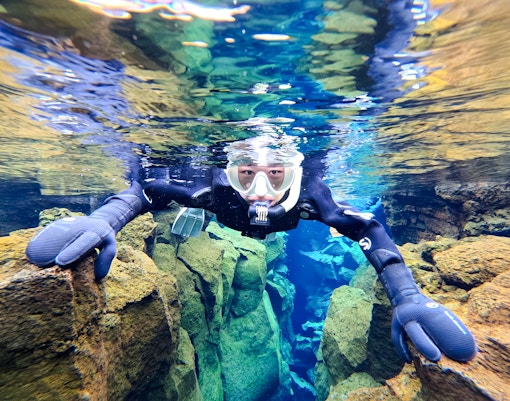
How the snorkel stop usually works
- Once the captain finds a sheltered cove, the boat slows and the crew explains where you can safely swim.
- They’ll hand out masks, snorkels, and sometimes fins or pool noodles/floatation aids, then show you where to enter and exit the water.
- You get 15–30 minutes in the water on most shared cruises, a bit longer on private trips.

Step-by-step: getting comfortable in the water
- Put on your mask so it feels snug but not painful; hair out of the seal line helps prevent leaks.
- Place the snorkel mouthpiece gently between your teeth and close your lips around it.
- Start at the surface, floating face-down, and breathe slowly through your mouth until it feels natural.
- Kick gently with your legs behind you (straight, not cycling), keeping movements small and relaxed so you don’t tire quickly.

Safety basics you should always follow
- Listen to the crew’s briefing and stay within the marked area around the boat.
- If you’re not a confident swimmer, tell the crew and ask for a life jacket or floatation aid before you get in.
- Never dive down under the boat, and keep a little distance from ladders and propeller areas.
- If water seeps into your mask, lift your head, adjust the seal, and clear it before continuing.

Snorkeling etiquette around wildlife
- Watch fish and any passing turtles from a distance; don’t try to touch, chase, or feed them.
- Keep your fins away from rocks and seabed where possible to avoid kicking corals or stirring up sand.
- Stay calm and quiet in the water so everyone, including the animals, can enjoy the moment.
What you’ll spot on your Tenerife cruise

Short-finned pilot whale
The resident star of Tenerife’s waters, these whales can be seen gliding gracefully all year round. They often travel in pods, surfacing close to boats for unforgettable views.

Sperm whale
Diving deep in search of squid, sperm whales occasionally rise near Tenerife’s deeper waters. Spotting one is a rare but thrilling highlight of any trip.

Bryde’s whale
These sleek, fast-moving whales are occasional visitors to the Canary Islands. With a little luck, you may see them slicing through the waves during feeding.

Fin whale
Fin whales, the second-largest whale in the world, pass by Tenerife during migration. Their enormous size and speed make sightings truly awe-inspiring.
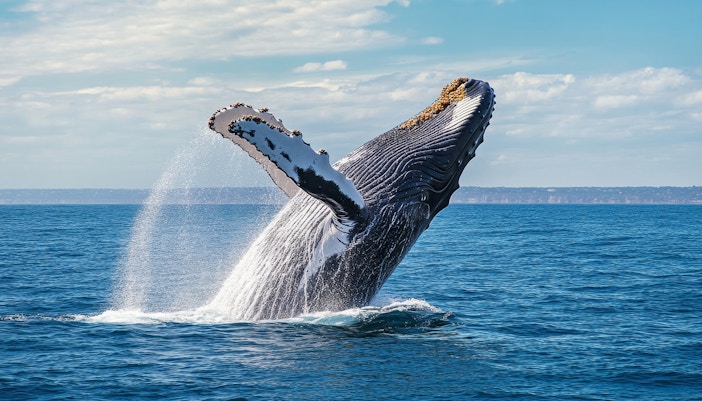
Blue whale
Blue whale, the gentle giant of the ocean, sightings are very rare but unforgettable. When spotted, they leave travelers speechless with their sheer size and majesty.

Orca (killer whale)
Orcas sometimes visit Tenerife during tuna season, following their prey. These powerful predators are a dramatic and exciting sight in the wild.

Bottlenose dolphin
Playful, social, and highly intelligent, bottlenose dolphins are year-round residents. They often leap alongside boats, delighting passengers with their antics.
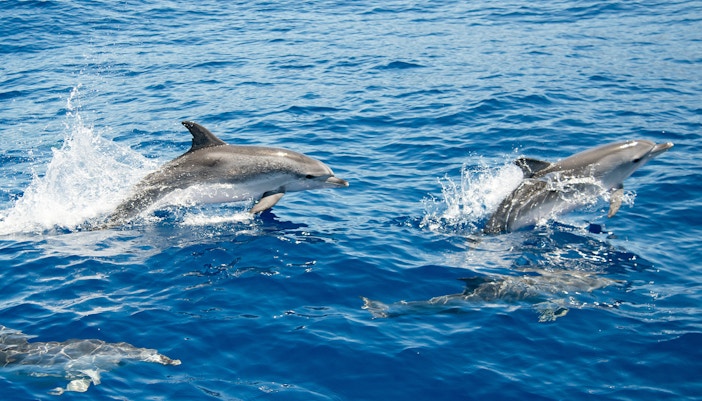
Atlantic spotted dolphin
These lively dolphins appear in summer, often traveling in large, energetic pods. Their spotted patterns make them easy to recognize as they play in the waves.
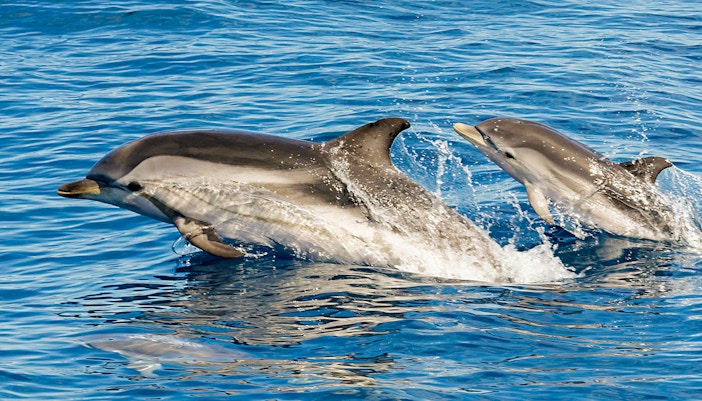
Striped dolphin
Known for their striking blue and grey stripes, these dolphins frequent offshore waters. They are fast swimmers and love to ride the bow waves of boats.

Common dolphin
True to their name, common dolphins appear seasonally in Tenerife. Their acrobatic jumps and playful behavior make them a favorite among visitors.

Loggerhead sea turtles
Occasionally spotted near the surface, these ancient mariners drift gracefully in Tenerife’s waters. They often bask in the sun between dives.

Seabirds
Shearwaters, gulls, and other seabirds circle overhead. Their swoops and dives add to the dynamic life of Tenerife’s marine ecosystem.
Plan your whale watching trip in Tenerife

Tours usually depart in the morning or late afternoon, coinciding with peak whale activity. Morning trips often promise clearer skies, while afternoon cruises reward you with golden light and, if timed right, a spectacular sunset over the Atlantic.

Spacious and stable, catamarans typically carry 40–100 passengers, with large shaded decks, cushioned seating, and room to move around. Many include snack bars, restrooms, and snorkel gear, making them perfect for families, groups, or anyone prone to sea-sickness.
Recommended tour:
- Costa Adeje: Whale & Dolphin Watching Catamaran Cruise
- Costa Adeje: Whale & Dolphin Watching Catamaran Cruise with Transfers

- Toilets and shaded seating are available on most boats.
- Onboard bars or snack areas offer drinks and light bites.
- Snorkeling gear is usually included on tours with swim stops.
- Luxury boats may add cushioned sun decks, Wi-Fi, and a lunch buffet.

- Sunscreen, sunglasses, and a wide-brimmed hat for sun protection.
- Light jacket or windbreaker for cooler breezes at sea.
- Camera or binoculars to capture sightings up close.
- Seasickness tablets if you’re prone to motion sickness.
- Waterproof bag to keep electronics and valuables safe.
- Bring a towel and swimwear if your cruise includes a snorkeling stop.

- Your crew knows the sea conditions, local routes, and wildlife behavior best. Always listen carefully to their directions, especially during boarding, when the boat is moving, or when approaching marine life.
- Even if you’re a confident swimmer, conditions can change quickly. Wear your life jacket whenever instructed.
- Hold onto railings when the boat is moving, and avoid leaning over the edge. Secure loose items like hats, sunglasses, or phones—strong sea breezes can send them straight into the Atlantic!
- Maintain a safe and respectful distance from whales and dolphins. Touching or feeding them is not only unsafe but also disrupts their natural behavior.
- For kayaking: Stay close to your guide and within their line of sight. Always maintain at least 60 meters distance from whales and 5 meters from dolphins. Keep your movements calm and avoid loud noises, splashing, or sudden paddling that could startle the animals or attract unwanted attention.
Visitor tips to make the most of your whale watching experience
- Arrive 15-20 minutes early to board smoothly and grab the best deck spots before the boat fills up!
- Even under a blazing sun, the sea breeze can feel chilly, especially on longer cruises. Pack a light jacket or windbreaker to stay warm.
- If you’re prone to seasickness, take non-drowsy motion sickness medication 30–60 minutes before boarding, or try ginger candies or wristbands—locals swear by them.
- The wind is no joke. A hat with a chin strap or sunglasses with a cord will spare you a lot of chasing!
- While many dolphins swim close to the boat, whales often appear at a distance. Binoculars help you catch those faraway tail flips and surface breaches.
- Strong scents can attract insects on land and may irritate sensitive wildlife noses. Go scent-free to keep the focus on the ocean air.
- Salt spray is part of the fun, but not for your electronics. Get a small dry bag to keep your phone, camera, and wallet safe from splashes.
- Double-check if your tour includes snacks or drinks; pack water and light bites if not.
- Boat decks can get wet and slippery. Sturdy footwear with good grip helps you move around safely.
- Protect your skin and the ocean by opting for mineral or reef-safe sunscreen. It prevents harmful chemicals from entering the water and keeps Tenerife’s marine ecosystem healthy.
- Respect marine life; you’re a guest in their home, so watch quietly and let them set their boundaries. Do not touch, feed, or pet them.
- Put your phone or camera down for a few moments—listen to the ocean, feel the wind, and watch these incredible creatures in real life. Sometimes, the best memories don’t fit on a screen.
Frequently asked questions about Whale Watching Tenerife
Direct interaction with whales is not allowed for safety reasons, but some tours offer snorkeling with dolphins.
Yes, most tours are family-friendly. Larger boats like catamarans are especially suited for kids, offering stable rides and shaded seating.
Tours may be rescheduled or refunded if sea conditions are unsafe. Light rain doesn’t usually affect departures, but strong winds can.
Basic swimming ability is recommended, and guides provide safety instructions.
Look for the “Blue Boat” certification or ask about distance rules, maximum passenger numbers, and no-chase policies. Eco-certified operators prioritize wildlife safety.
No. Some cruises include a swim and snorkeling stop with gear, while others focus only on whale and dolphin watching. Check your chosen ticket’s inclusions carefully.
Yes. Resident short-finned pilot whales and dolphins are present year-round, although sightings are never guaranteed. Winter and early spring bring extra chances to see migrating whales.
Costa Adeje is the most convenient from big resorts. Los Cristianos adds eco-sailing and themed boats, Los Gigantes gives huge cliffs, and Las Galletas is great for small-group yachts.